
Recession files (part 3): the postwar economy unwinds hard

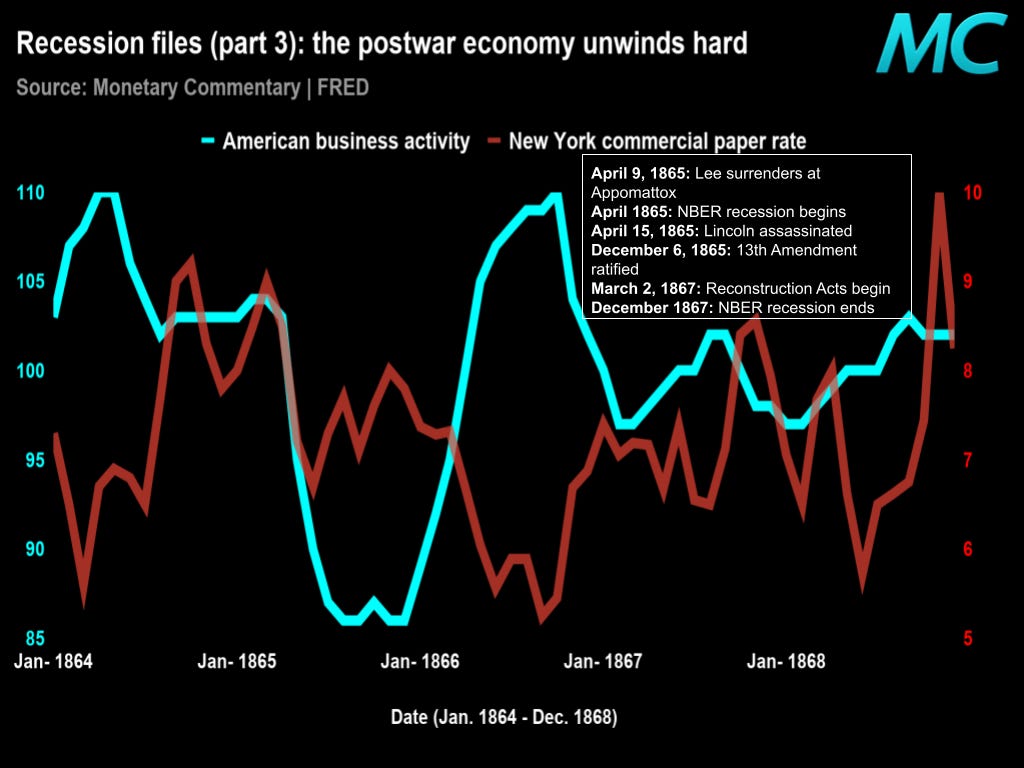
This chart captures the recession that followed the Civil War. The U.S. was trying to convert a war economy back into a private commercial economy while the institutional foundations of the old economy were being rewritten.
The business activity index shows a long downturn from the April 1865 peak to the December 1867 trough, while New York commercial paper rates keep the chart grounded in the credit conditions facing merchants and firms during the transition.
This was a national adjustment layered on top of regional devastation: the North was moving out of wartime production and federal demand, while the South was emerging from physical destruction, emancipation, labor reorganization, and collapsed wealth structures. That makes this recession different from a normal inventory correction or financial panic. It was the economy digesting victory, demobilization, and institutional rupture at the same time.
What we learn from this downturn is that peace can be economically disruptive when the wartime boom ends before the peacetime system has fully formed.
Check out part 1 (America’s first modern credit panic) and part 2 (The pre-Civil War economy cracks).