Top Macro Charts (Part II)
Here are some more notable macroeconomic-focused charts I've created using public data, each with written commentary.

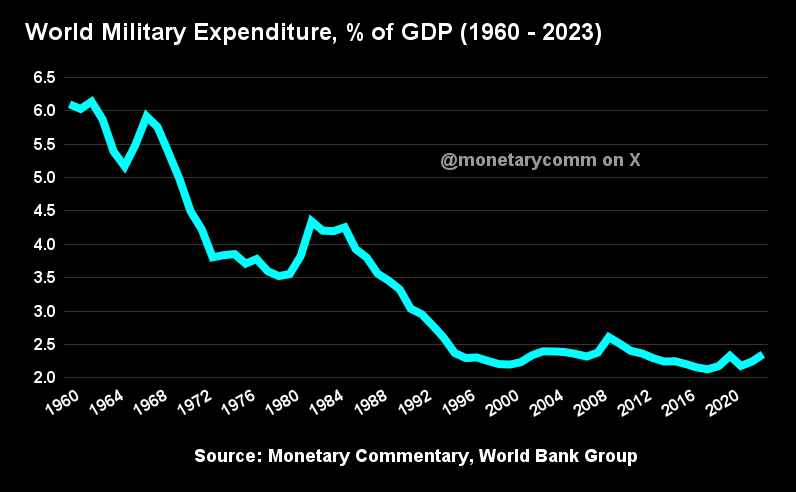
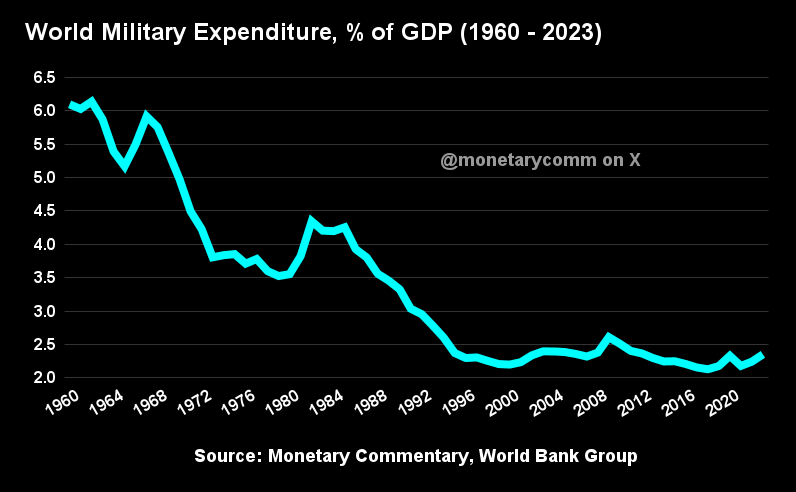
A rebound in world ex-U.S. #military spending as a percentage of #GDP likely would weaken the U.S. #dollar if it signals that foreign nations are boosting their own defense investments, shifting global capital flows away from the U.S. and reducing the dollar’s safe-haven appeal. In 1960, the European Union spent 3.7% of GDP on defense, well above 2023's 1.72%. #Trump wants lower rates/dollar, and, with the EU set to ramp up fiscal spending, I wouldn't be surprised to see this secular downward spiral in global military spending start to reverse. USD is already starting to come off its highs -- rather aggressively as of late-- as the #Trumpcession kicks in, but it still remains historically high. (Note: chart below does include U.S. share, though that's not the point here and the broader trend doesn't budge with or without it)
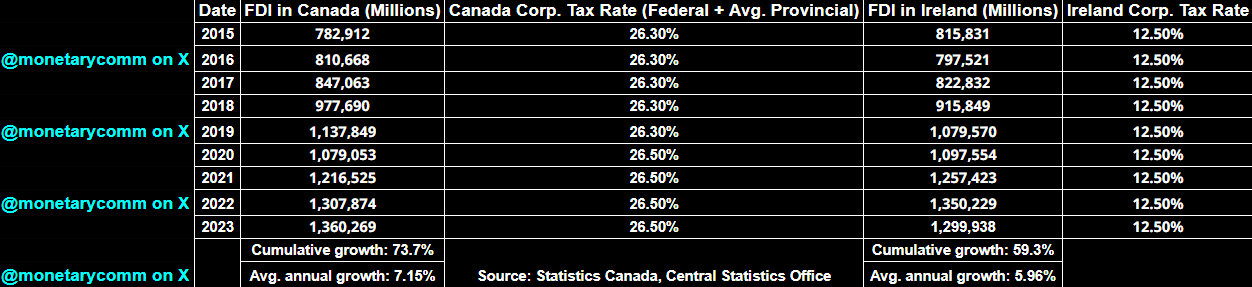
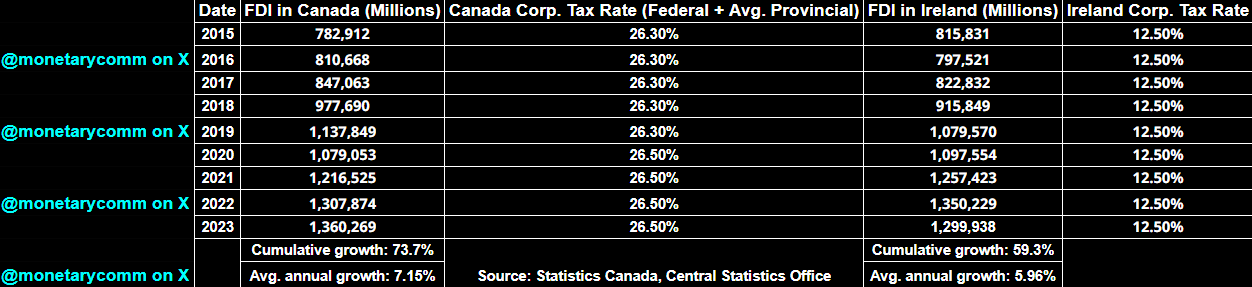
Interestingly, growth in #Canada’s foreign direct investment from 2015 to 2023 — 73.7% cumulative and 7.1% annually — has actually outpaced #Ireland’s 59.3% and 5.9%, even though Ireland has a lower corporate tax rate of 12.5% compared with Canada’s 26.5%. Canada’s larger market offers a bigger consumer base. We all know that, but I can recall official research highlighting how Canada’s competitive tax incentives, such as R&D credits, and strong infrastructure help balance out the higher corporate levy. While Ireland’s FDI growth is strong, it’s primarily driven by tax incentives and concentrated in tech and pharma, which may limit its broader appeal to investors, especially as the AI bubble comes under pressure.
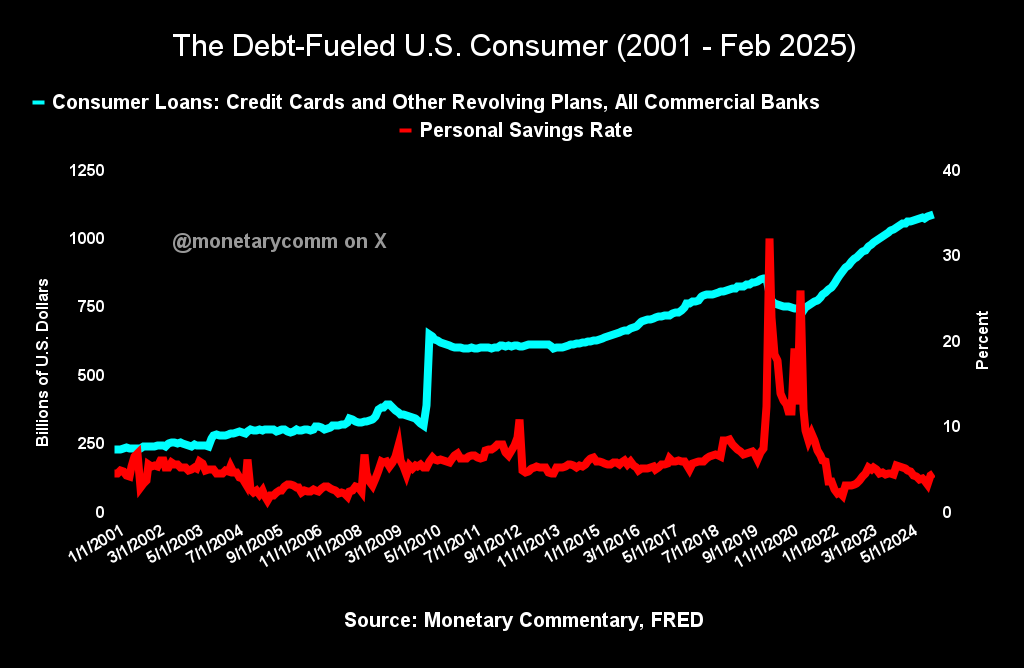
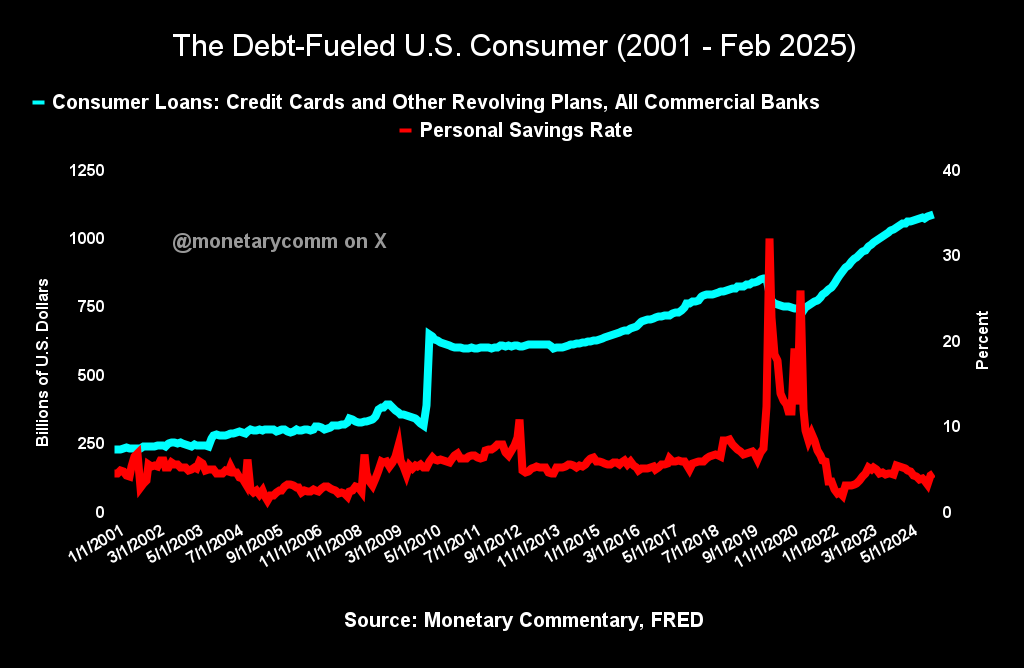
Credit card #debt has reached an astonishing $1.09 trillion as of Feb. 2025, marking a roughly five-fold increase since the inception of the data series in 2001. This huge accumulation stems from rising living costs, wage growth failing to keep up with #inflation, and historically low savings have forced consumers to increasingly rely on #credit to cover everyday expenses and maintain their standard of living. This is a scary chart to look at, especially as card delinquencies remain on the upswing.
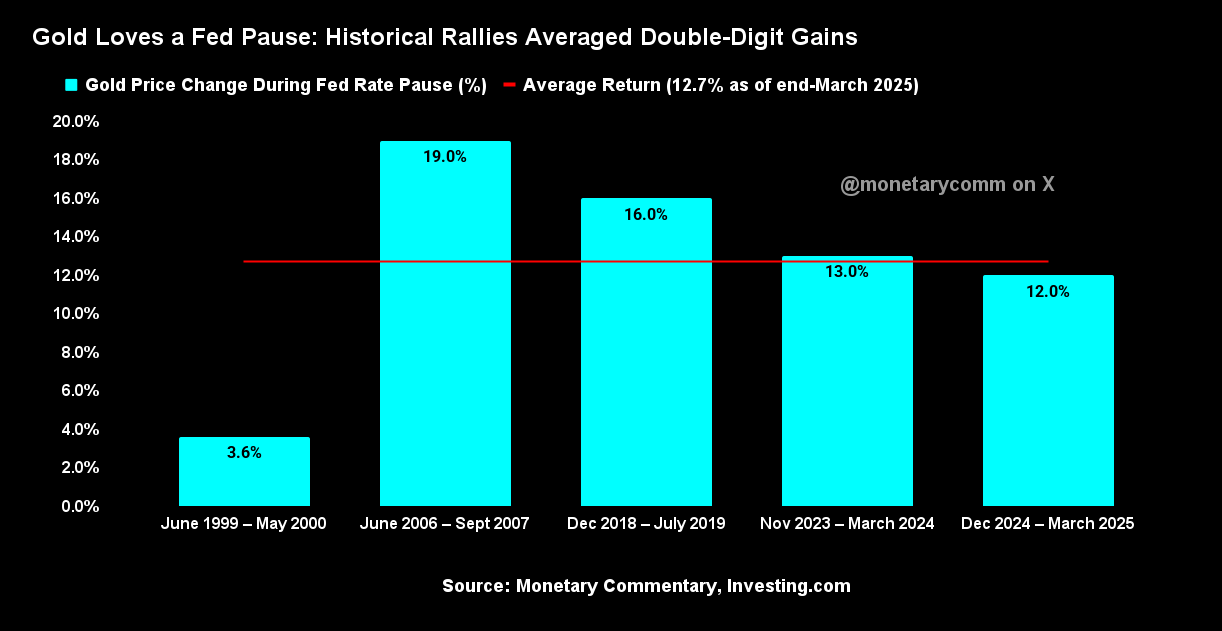
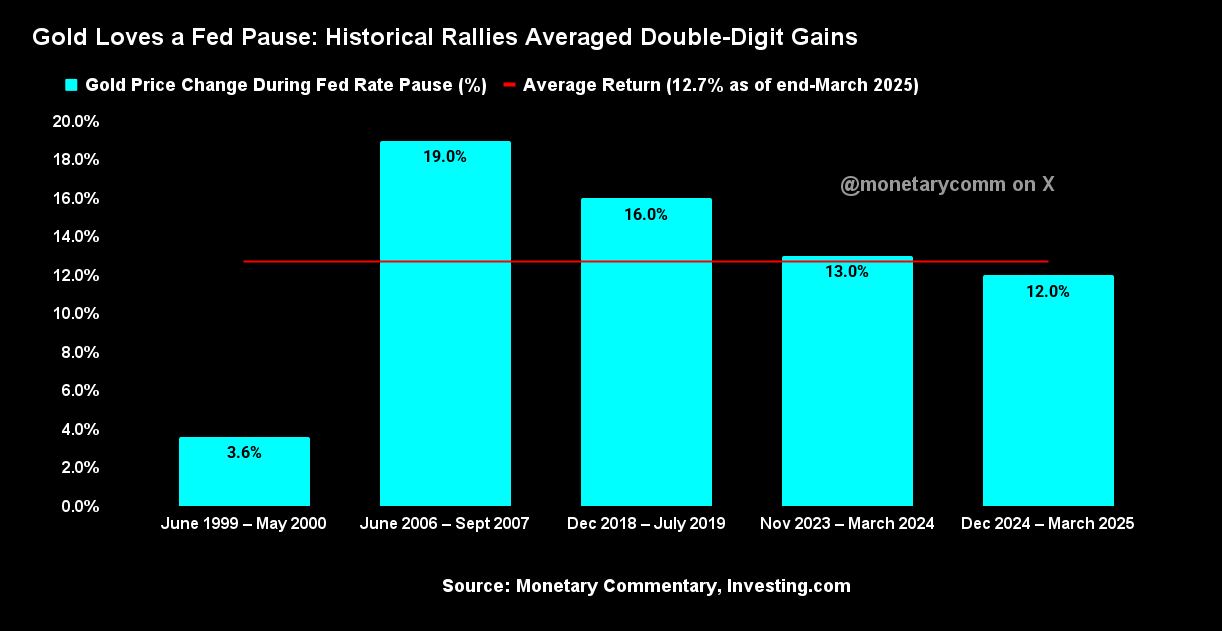
When the #Fed pauses rate hikes, #gold tends to respond quite favorably as investors recalibrate their expectations. But, the magnitude of the move depends on whether economic uncertainty is high. During the 2006–2007 pause, gold climbed +19% over 15 months as markets feared an economic slowdown and anticipated looser monetary policy. Still, the 1999–2000 pause saw a smaller +3.6% increase, reflecting a relatively more stable economic backdrop with less #inflation pressures. In the 2018–2019 period, gold gained +16% in just seven months, driven by trade wars amid #Trump 1.0 and expectations of rate cuts. And I'm sure we all know how gold has been faring in the current pause (+12%), which started only two months ago, undercoring the extent of unknowns in the economic outlook. Which begs the question: who was smart enough to add gold exposure the day the pause was initiated?!
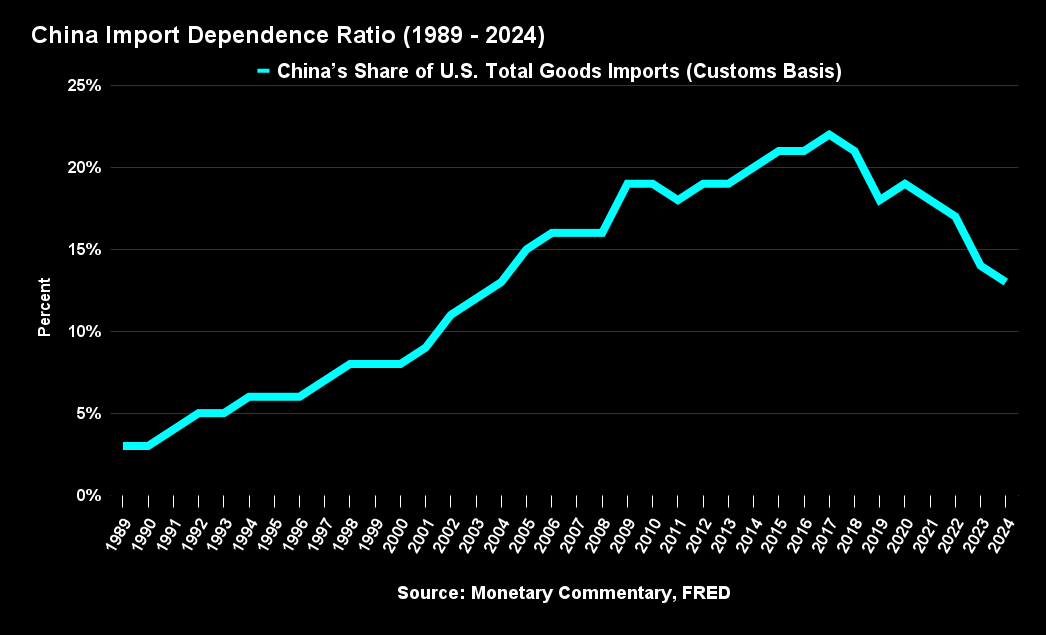
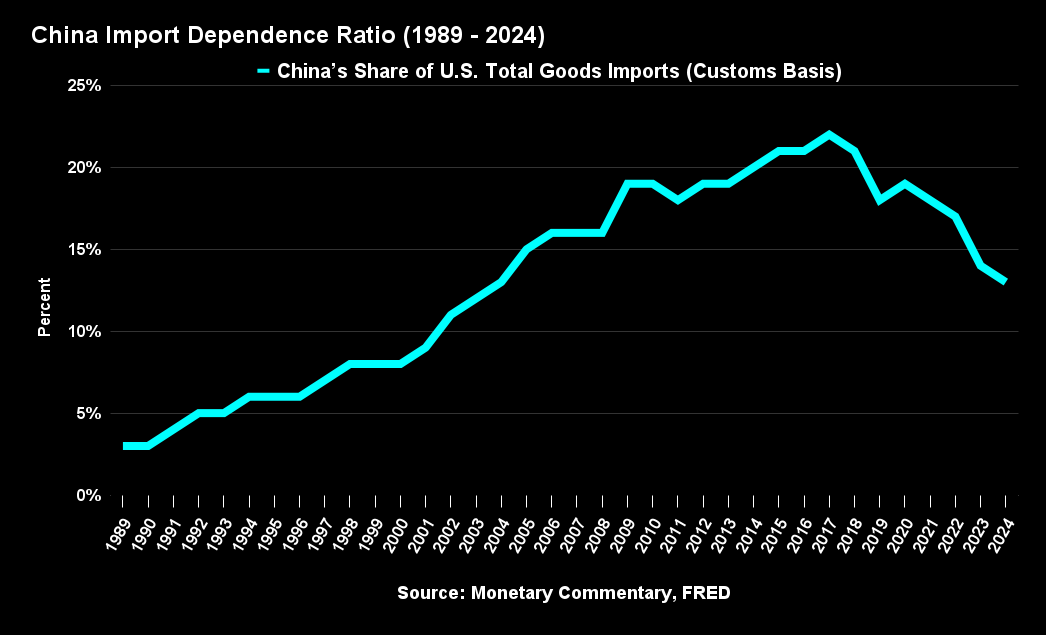
#China’s dominance in U.S. imports is eroding, with the China import share ratio down to 13% in 2024 from 22% in 2017. Even so, its foundational role in global supply chains remains deeply embedded. While policy measures and #tariff impositions have nudged some trade diversification, China’s entrenched role as a global production nucleus persists due to its unmatched economies of scale, specialized supply networks and lower production costs. This structural inertia underscores the trade-offs policymakers face: efforts to bolster domestic #manufacturing and reduce dependency must contend with the economic efficiencies that have long defined China’s comparative advantage. After World War II, the U.S. gradually lost its position as the world’s manufacturing powerhouse. By the 1970s and 1980s, manufacturing shifted to countries with lower labor costs, chiefly in Asia, led by Japan and later China. The U.S. transitioned to a service-oriented #economy, and while it remains a major industrial player, it has never regained the dominance it once held in global manufacturing output.
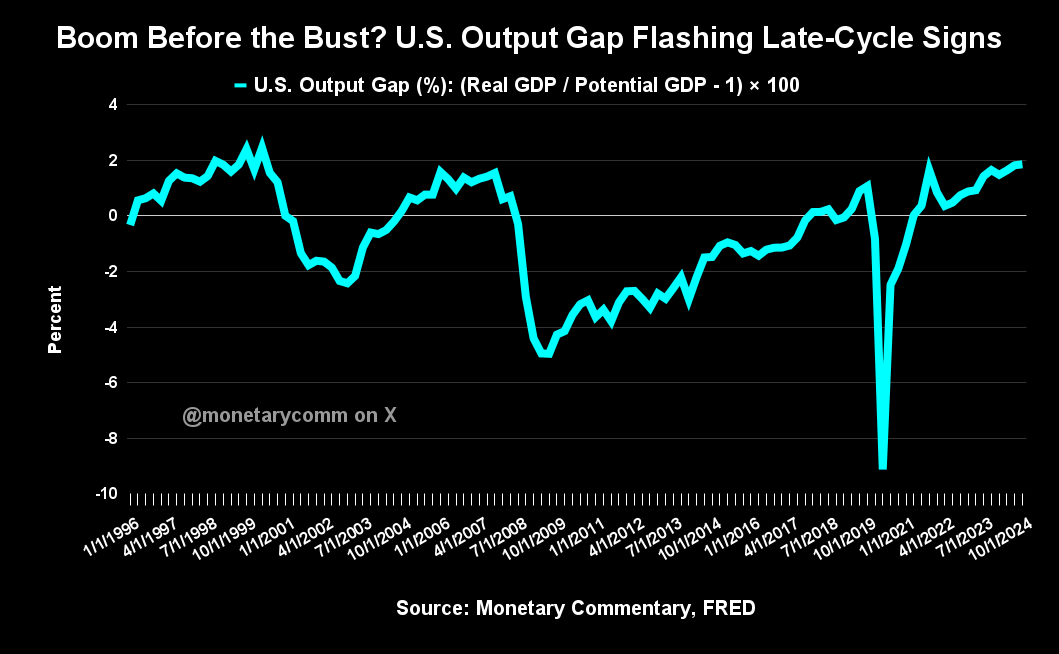
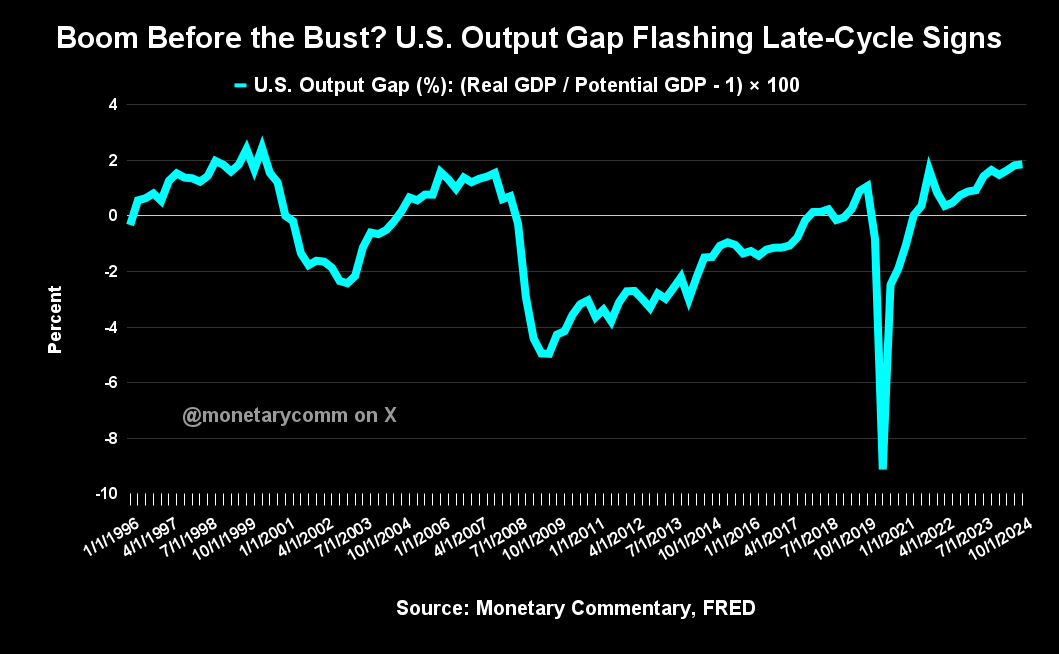
The U.S. #economy appears firmly in the late-cycle phase, with the output gap (i.e., the difference between actual and potential real #GDP) running increasingly positive since the magical post-pandemic recovery — a nonlinear move reminiscent of previous economic peaks. It suggests the economy has been operating above its maximum sustainable capacity (as of Q4 2024). And the recent flattening of the output gap’s trajectory hints at a loss of economic momentum, a classic precursor to a #recession, raising the question of whether this excess demand can be maintained or if a contraction is imminent. (Note: potential GDP is estimated using a mix of long-run trends in labor force growth, capital stock and total factor productivity, meaning that deviations from it reflect short-term economic imbalances rather than structural shifts.)
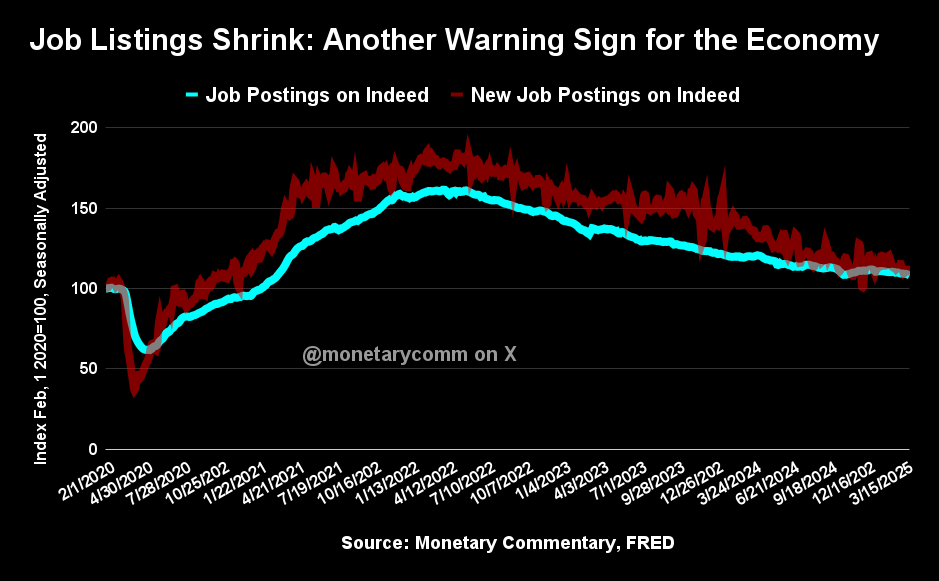
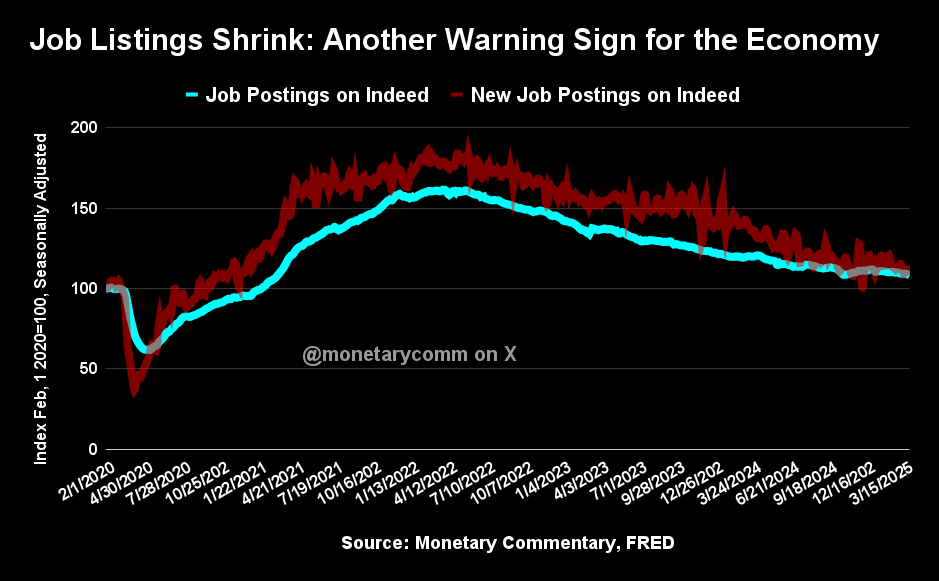
Another clear signal of a slowing #economy — this time from the labor market. Job postings have been in steady decline since 2022, leaving fewer opportunities per unemployed worker. Notably, Indeed data, which offers a more real-time view than nonfarm figures, shows that the slight rebound in openings seen in late 2024 has now completely vanished. Still, they remain some 8% above pre-pandemic levels, which isn't much, especially when compared with the high-teens prints at the 2022 peak. During downturns, new postings on Indeed tend to fall rapidly, while the total postings index declines more gradually as older listings phase out, an important trend to watch this year.
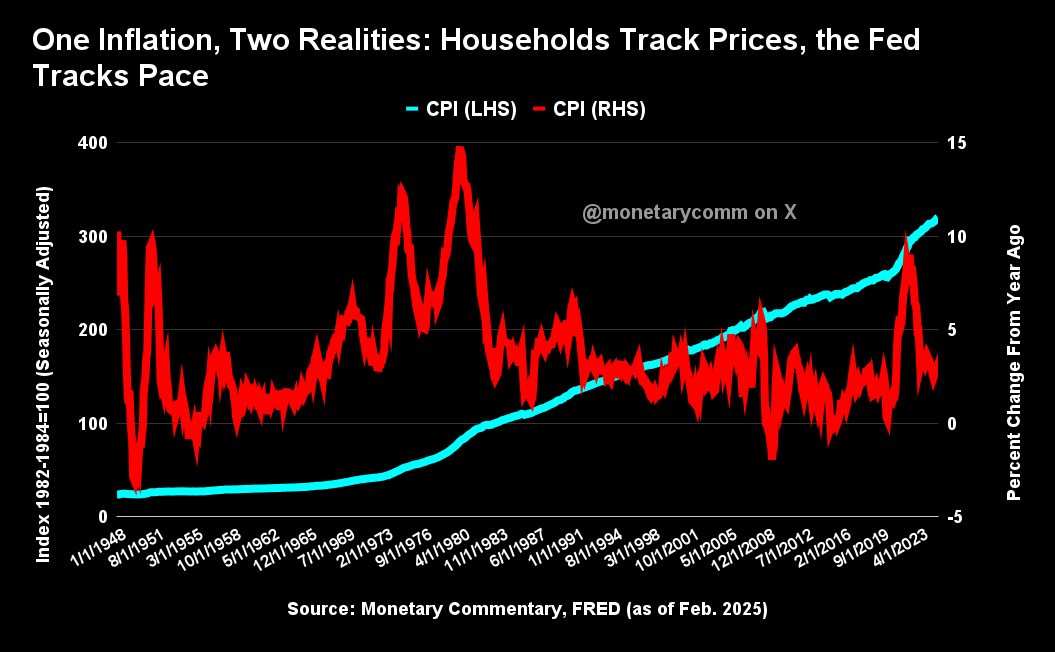
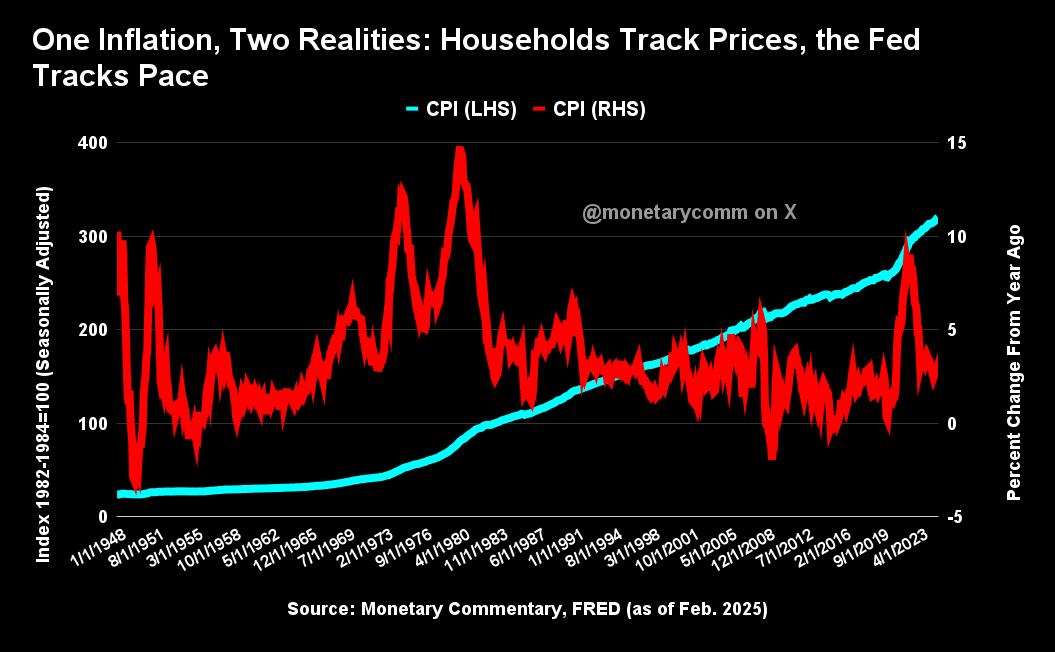
Consumers bristle at the inexorable climb in the #CPI itself, even as the #Fed focuses solely on the marginal change. This divergence has always fostered a perception gap, where policymakers celebrate a “cooling” #inflation rate toward their imaginary 2% target while households still feel the pinch of an ever‐elevating cost of living.
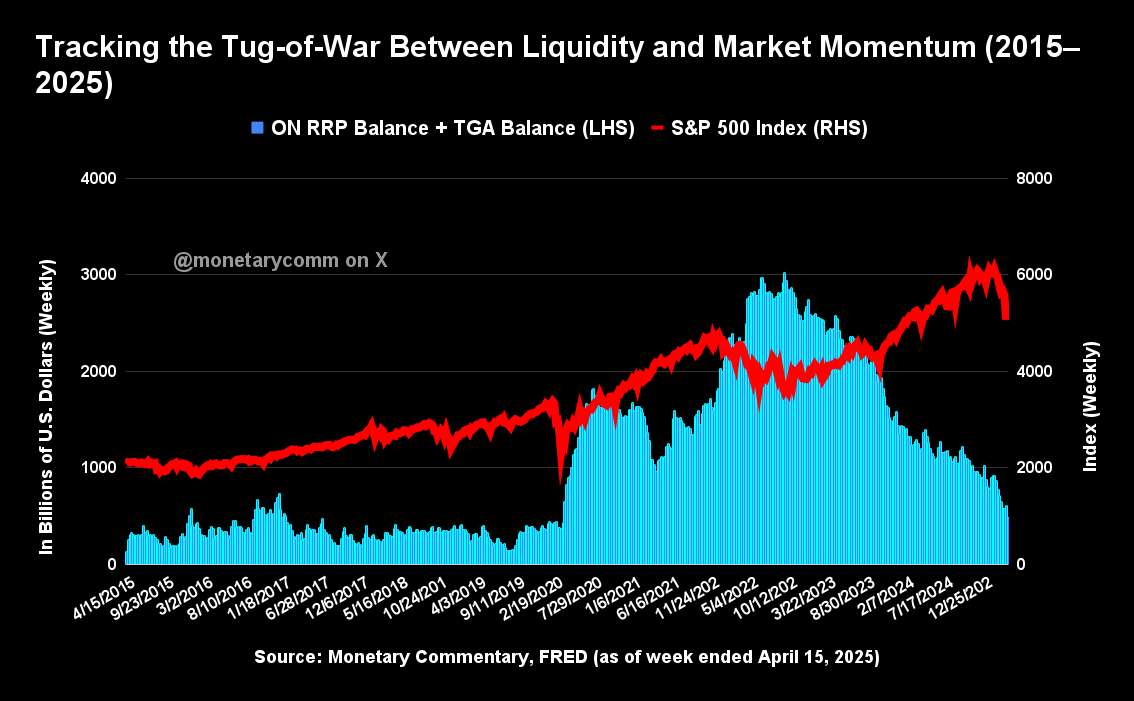
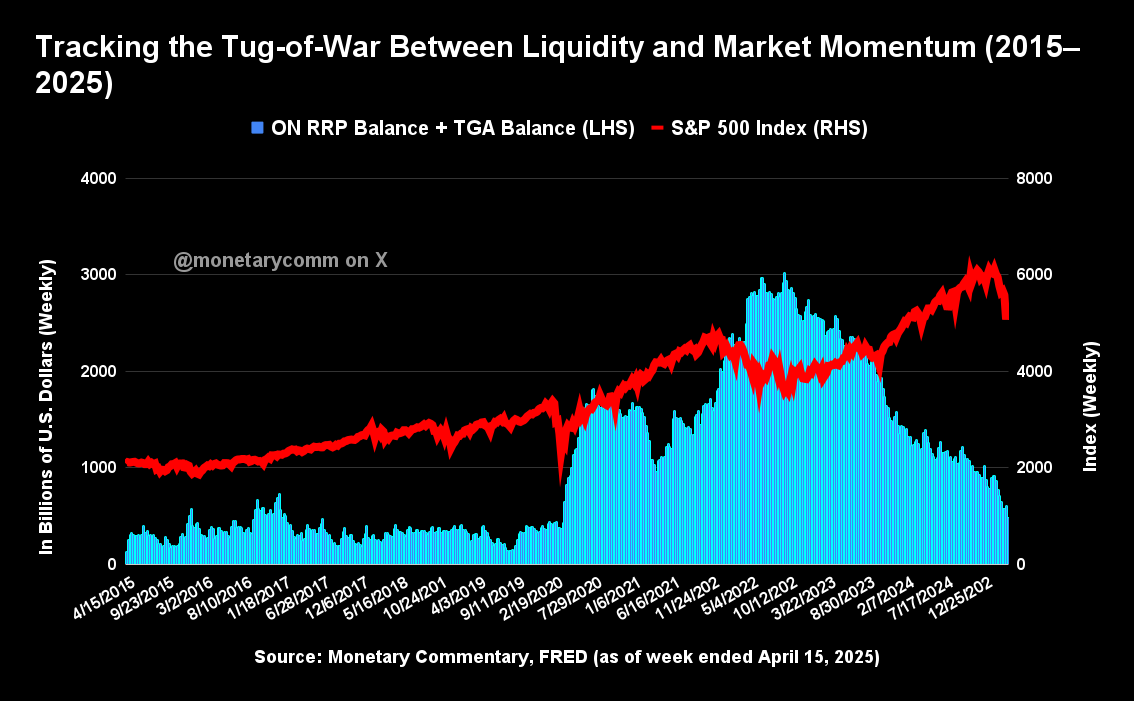
The peak in system #liquidity in mid-2022 coincides with a structural plateau in $SPX, after which a rather lagged relationship unfolds: as ON RRP and TGA balances decline — signaling redistribution of liquidity into the private sector — equities continue rallying into early 2024. Not a perfect relationship, though perhaps liquidity recycling from public to private sector intermediaries momentarily offset the #QT headwinds. In any case, the recent synchronized drawdown in both system liquidity and equity prices in early 2025 hints at a liquidity floor being tested, with risk assets now more tightly tethered to reserve scarcity and collateral constraints. The drawdown in these sterilized balances reflects funds being reabsorbed into bank reserves or deployed into risk assets via money market and dealer intermediaries. In all, risk assets are now operating under a materially different liquidity regime; one in which marginal dollar availability is constrained, and the balance sheet capacity of dealers and money funds is once again becoming a binding constraint.
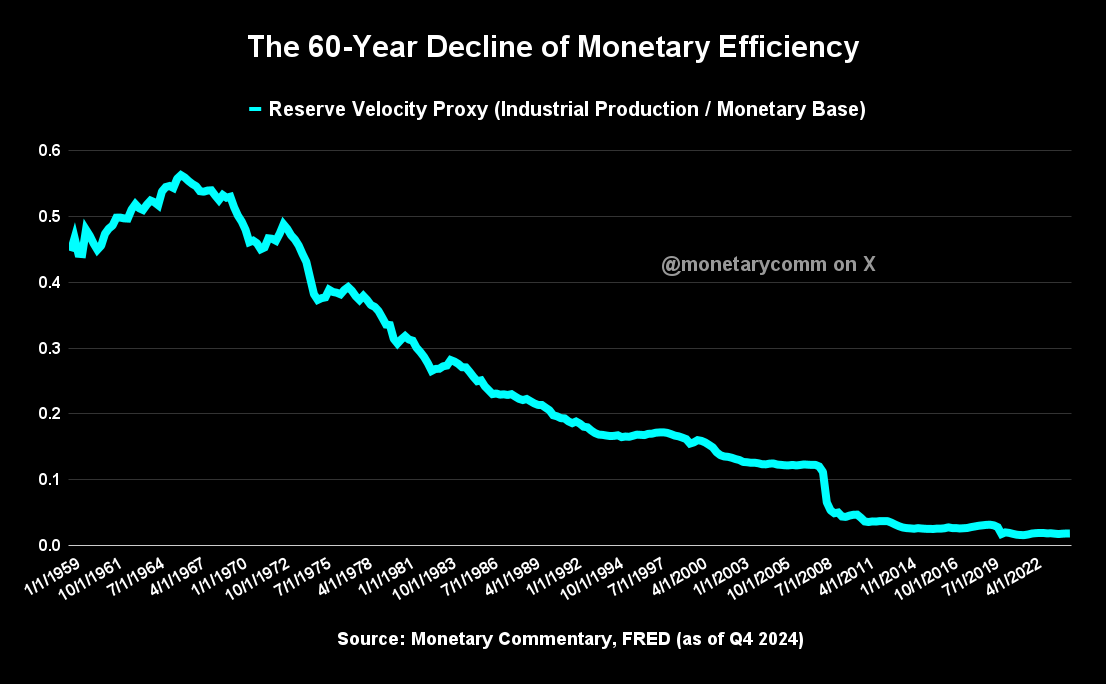
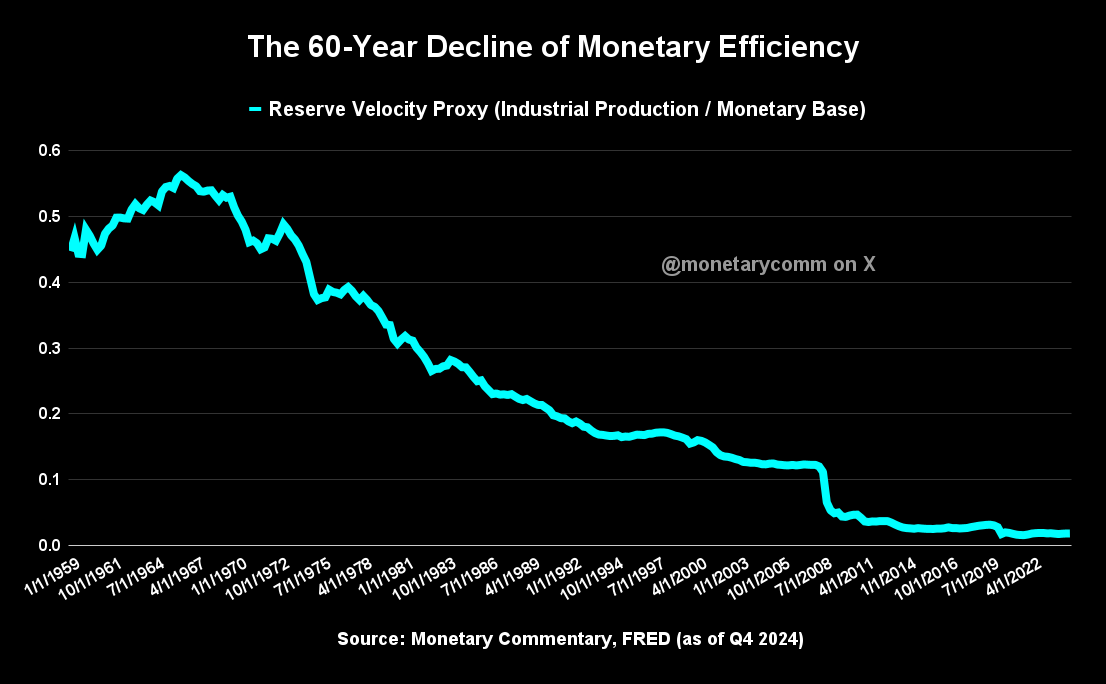
Here's a visual on the structural decay of monetary transmission over six decades, a phenomenon obscured by nominal aggregates but laid bare by the steady collapse of reserve velocity. From a peak near 0.55 in the mid-1960s, the ratio of industrial production (seasonally adjusted) to monetary base (not seasonally adjusted) has dropped with almost uninterrupted persistence. This long descent reflects a profound #macro shift: central banks have increasingly injected reserves (i.e., fake #money) that fail to catalyze proportional real output, signaling a growing dislocation between #liquidity creation and productive capacity. The steep post-GFC collapse — and its failure to mean-revert post-COVID — suggests the monetary base has become structurally inert, absorbed into financial plumbing rather than mobilized into productive lending or investment. This trajectory marks the transition from monetarist effectiveness to liquidity saturation, where marginal dollars of base money increasingly serve as collateral or excess reserves rather than engines of growth. The implication is stark: monetary policy has become less about stimulating real activity and more about stabilizing a financialized ecosystem increasingly decoupled from the physical #economy.