
When Washington accidentally slammed the consumer-credit brake

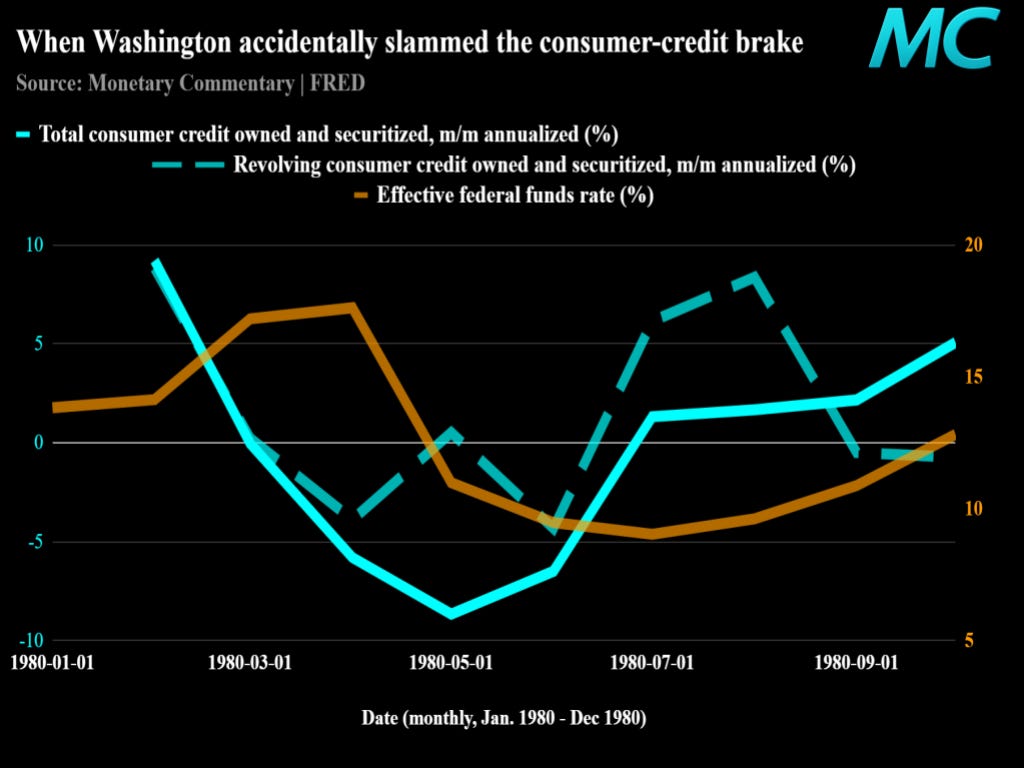
The 1980 credit-control shock was a rare case where Washington attacked inflation by choking the quantity of credit directly. Consumer credit growth flipped from expansion to contraction within months, with revolving credit hit hardest because banks and retailers suddenly had a political and regulatory reason to pull back from marginal borrowers.
Notably, credit collapsed while fed funds was still extremely high, then rebounded almost immediately once the controls were lifted and rates were falling. That makes the episode a clean reminder that household demand can be crushed by credit availability itself, even before interest-rate arithmetic fully works through balance sheets.